
Ligent Co-founder Dr. Weiping Huang Speaks at Citi China Conference on Optical Connectivity and New Growth Opportunities in the AI Era
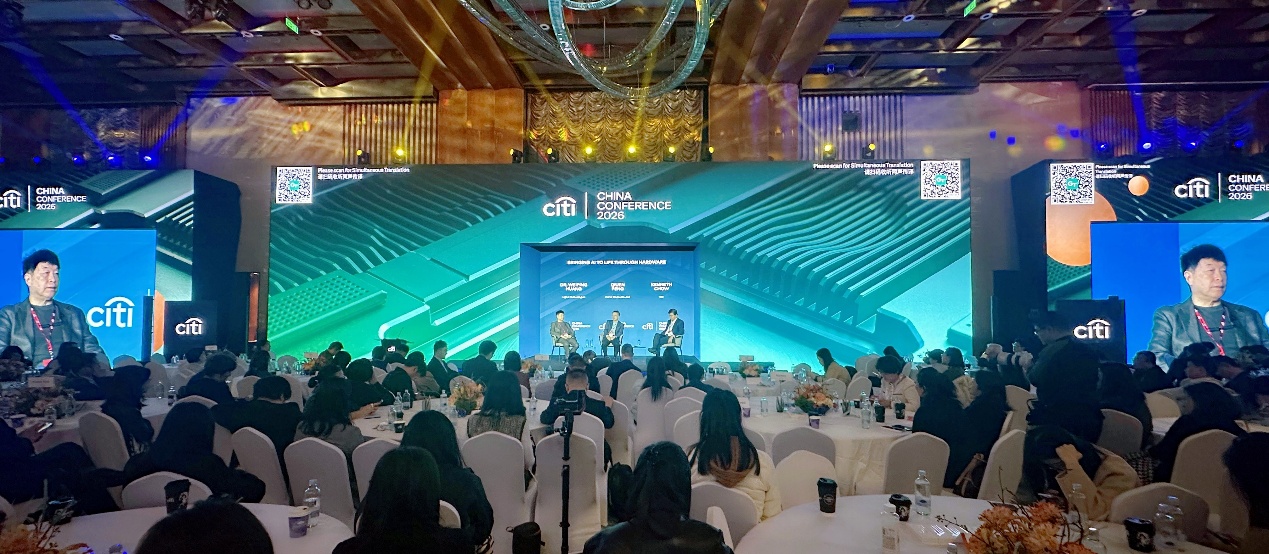
Photo caption: AI panel discussion at the 21st Citi China Conference
On November 11, 2026, Dr. Weiping Huang, Co-founder and Non-executive Director of Ligent (9856.HK), participated in a panel discussion titled “Empowering AI Through Hardware: Bringing Artificial Intelligence Within Reach” at the 21st Citi China Conference in Shanghai. Joining industry leaders including Qiuen Peng, Chief Financial Officer of HONOR, Dr. Huang shared industry insights and Ligent’s experience with an audience of more than 100 institutional investors and business leaders. The discussion covered global demand trends for AI hardware, the long-term growth drivers of optical connectivity, open collaboration across the AI ecosystem, and Ligent’s global expansion.
Optical Transmission and Electronic Computing: An Inevitable Direction for the Information Industry
Addressing questions about a potential slowdown in AI capital expenditure and the sustainability of long-term growth in optical connectivity, Dr. Huang began by reflecting on Ligent’s founding vision. In 2002, the industry was still experiencing the severe downturn following the collapse of the investment bubble, and pessimism about the prospects of optical communications was widespread. Nevertheless, the founding team remained convinced that transmitting information optically and processing it electronically represented the inevitable direction of the information industry. With light offering an inherently optimal medium for transmitting information, optical modules would become indispensable components in the AI era.
Dr. Huang explained that this long-term perspective had enabled Ligent to navigate multiple industry cycles. In its early years, the company faced substantial challenges, including stringent qualification requirements from global customers, overseas dominance of high-end optical chip technology, and long payback periods for research and development. Ligent responded by building its core technology capabilities through in-house R&D while pursuing a series of acquisitions to strengthen its manufacturing expertise in datacom optical modules and its capabilities in upstream optical chips. Today, amid surging demand for AI computing, Ligent has established itself as a key supplier underpinning global computing infrastructure.
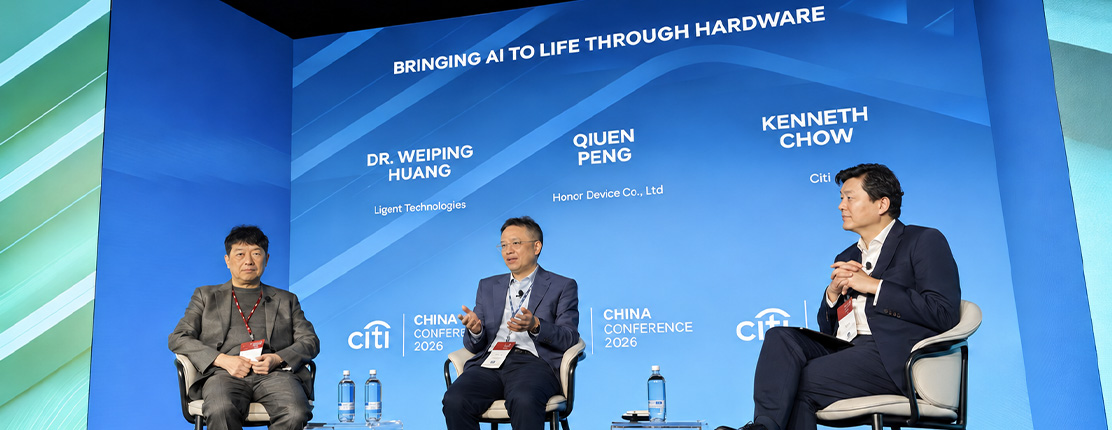
Photo caption: Dr. Weiping Huang, Co-founder and Non-executive Director of Ligent, speaking at the panel discussion
AI Computing Is Still in Its Early Stages, with a Long Growth Runway for Optical Connectivity
Responding to concerns about the pace of AI data center construction, Dr. Huang emphasized that AI computing remains in the early stages of development and is far from reaching maturity. Investment in data center infrastructure is essential to the deployment of AI. Rather than seeing a decline in demand for critical optical connectivity resources, the industry continues to face widespread supply bottlenecks.
He noted that as the AI industry transitions from infrastructure buildout to application deployment, value creation in computing will increasingly extend to the edge and end devices. Optical connectivity is expected to account for a growing share of the overall value of computing networks, giving the sector a longer growth runway than computing infrastructure buildout alone.
Dr. Huang also highlighted a fundamental difference between the current AI revolution and previous waves of internet development: enterprise and consumer applications are expected to advance toward deployment and monetization simultaneously. AI assistants are likely to gain traction first on smartphones and other smart devices, where strong user engagement and retention could generate substantial new connectivity demand.
Network architectures at the edge and device level are set to undergo a comprehensive transformation. Ligent’s early investment in its three business units—optical chips, optical modules, and terminals—positions the company to address this shift.
Dr. Huang stressed that the emerging AI ecosystem must move beyond traditional zero-sum thinking. Open collaboration and mutually beneficial partnerships across the value chain will be essential to accelerating the realization of industry value.
Expanding a Global Footprint to Meet Diverse Market Needs
Dr. Huang noted that Ligent has been international in its outlook and operations since its founding. Its core management team includes seasoned industry experts from overseas who remain closely involved in day-to-day operations. The company has established R&D centers in the United States and Singapore, while its manufacturing bases in the United States, Thailand, and China are rapidly expanding capacity to meet market demand.
Drawing on the industry resources and capabilities gained through earlier overseas acquisitions, Ligent is also accelerating the development of optical chip and optical module production lines at its New Jersey facility.

Photo caption: Ligent’s manufacturing facility in New Jersey, United States
Looking ahead, Dr. Huang said Ligent will build an R&D and manufacturing network spanning China, Southeast Asia, and North America. This network will enable the company to respond flexibly to global market demand and changes in the geopolitical environment, while capturing new growth opportunities arising from consumer AI applications, edge computing, and the development of new network architectures over the next two to three years.